
Sex Offender Checks in San Joaquin County
The official public starting point is the California Megan's Law Website, which the California Department of Justice manages. It can be filtered by county, city, ZIP Code, address area, or name. Local agencies register and verify people within their jurisdictions, then send those records to DOJ. Inside Stockton, Tracy, or Manteca, the city police department is generally the registering agency. The San Joaquin County Sheriff's Office has that role in unincorporated and contract areas.
Prepare a full name and, when possible, a city, approximate age, or address. Similar names are common. DOJ specifically warns that name, age, and address alone can produce mistaken identity. A result should be matched against the photograph, physical description, aliases, location category, and qualifying offense fields that are actually displayed. The registry is a focused disclosure system, not a full criminal-history file. Court dockets and arrest records answer different questions.
California Megan's Law in San Joaquin
California enacted its public-notification law in 1996, and Penal Code section 290.46 now controls online disclosure. DOJ publishes only the information the law permits. Some registered people fall into nondisplay categories and will not appear. The website also omits offenses that did not create a registration duty, even if another public court source shows them.
That limit matters in San Joaquin County. No result does not prove that a person has never registered, and a visible result is not a full account of every case. The public registry is built for safety planning. Use the Superior Court's criminal records channel when the question concerns filed charges, disposition, or sentence rather than registration status.
The DOJ overview explains the public-notification framework. The captured California Megan's Law overview shows the state agency's role:
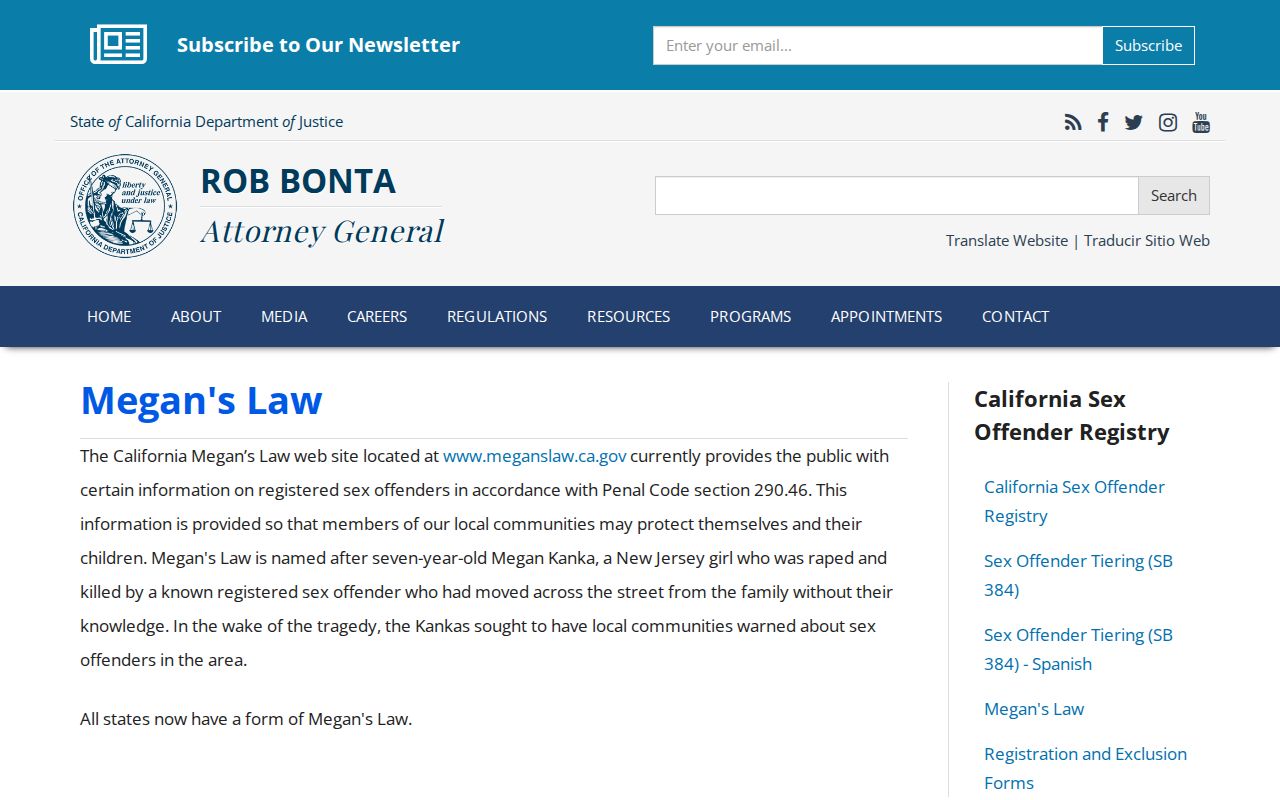
That state layer is the official San Joaquin County public search even though registration work begins with a local police department or sheriff.
How to Search California Megan's Law
Open the state portal and read the conditions before using its search controls. The disclaimer explains both disclosure limits and lawful use. Searches can then narrow to San Joaquin County or a city such as Stockton, Tracy, or Manteca. Address and radius tools are useful for neighborhood awareness, while a name search fits a known person. Map and list controls may change as DOJ updates the interface.
- Open California Megan's Law, read the disclaimer, and agree to its terms.
- Choose a name or place search, then enter a city, ZIP Code, county, or address.
- Review the map or list and compare several identifiers before selecting a result.
- Open the profile and read its address category, offense, status, and display limits.
| Field Label | Type | Required | Notes |
|---|---|---|---|
| Disclaimer agreement | Checkbox or button | Yes | Acceptance is required before a search. |
| Name | Text | No | Use for a known registrant; compare more than the name. |
| City or ZIP Code | Text or select | No | Narrows a place search within California. |
| County | Select or map | No | Choose San Joaquin for a countywide result set. |
| Address or radius | Text and map | No | Supports address-area searching, described by official sources as up to 10 miles. |
| Map or list | Buttons or tabs | No | Changes the way current results are presented. |
Why San Joaquin Results Have Gaps
DOJ states that law-enforcement agencies update registry information daily, yet the state database still depends on information supplied by those local agencies. A move, correction, or verification may not appear at the exact moment it is recorded locally. Information can change quickly. A stale address should not be treated as proof that a person violated a duty.
Display law creates another gap. A profile may show a full home address, a ZIP Code, a conditional address, or no public listing at all. Those categories reflect what California permits DOJ to disclose. They do not function as risk scores. For concerns about an apparent error, follow the contact or correction channel on the California Megan's Law Website rather than contacting the listed person.
California's registration-law summary gives context for those limits. The archived DOJ summary of California registration laws outlines duties and disclosure rules:
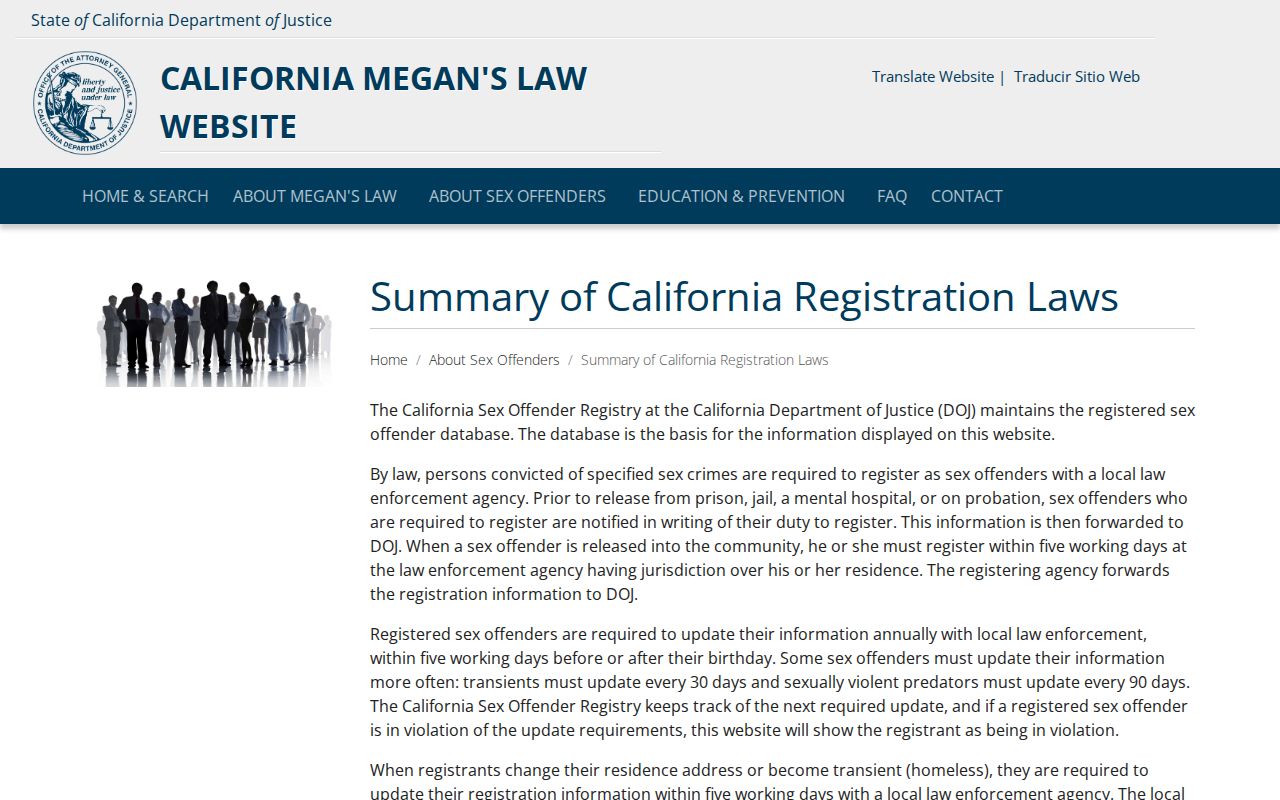
The summary helps explain why a duty to register and a public website listing are related but not identical.
Inside a Registry Profile
A public profile combines identity, location, qualifying-offense, and registration information to the extent disclosure law permits. Read the fields together. An alias may explain a name mismatch, while a photograph and physical descriptors can help avoid confusing two people. The displayed location may be an exact home address, a ZIP-based location, or a conditional category. DOJ does not publish nonregistrable offenses on the registry.
| Name & Aliases | Public identity names associated with the registration record. |
|---|---|
| Photo & Description | A public photograph and physical traits when DOJ displays them. |
| Location Category | Home address, ZIP or city area, conditional address, or another legally permitted category. |
| Qualifying Offense | The offense or offenses requiring registration, not unrelated criminal allegations. |
| Marks and Tattoos | Scars, marks, or tattoos when included in the current public interface. |
| Registration Status | Compliance or other status information where the public record provides it. |
Tracy Registrant Appointments
Local registration is not completed through the public search website. California requires registration with the law-enforcement agency that has jurisdiction over the residence. Tracy Police Department gives San Joaquin County readers a clear local example: its records page says arson and sex registrants must make an appointment, and it links to an appointment scheduler plus DOJ registration and exclusion resources.
People living elsewhere should confirm the proper agency before appearing. City police departments generally handle addresses inside city limits. The Sheriff's Office generally handles unincorporated or contract areas. Research did not confirm a single countywide appointment desk or one set of office hours for Stockton, Manteca, and sheriff jurisdictions, so the correct step is to contact the agency of jurisdiction. The public registry itself is not an appointment or compliance portal.
California Registration Levels and Requirements
Penal Code section 290 uses a tiered system. Adult Tier 1 has a ten-year minimum period, Adult Tier 2 has a twenty-year minimum, and Adult Tier 3 is lifetime registration. The period is a statutory minimum, not a promise that a profile will vanish on an anniversary. Eligibility, completion, and any required petition process must be assessed under current law and the person's case.
| Level / Tier | Duration | Verification Frequency |
|---|---|---|
| Adult Tier 1 | 10-year minimum | Annual update, plus changes required by law |
| Adult Tier 2 | 20-year minimum | Annual update, plus changes required by law |
| Adult Tier 3 | Lifetime | Annual update, plus any shorter statutory schedule |
| Juvenile Tier 1 | 5-year minimum | Verify current duties with the registering agency |
| Juvenile Tier 2 | 10-year minimum | Verify current duties with the registering agency |
San Joaquin Verification Schedules
California generally requires a registrant to appear with the local agency within five working days after release or establishing residence. An annual update falls within five working days before or after the person's birthday. Transient registrants update every 30 days, while sexually violent predators update every 90 days. Moves and other changes can carry separate deadlines under current law.
These schedules explain why local police and Sheriff records feed the DOJ website. They also explain why the public should not infer noncompliance from an old-looking entry. A compliance conclusion belongs to law enforcement after it checks the legal duty and agency file. If urgent conduct creates an immediate safety risk, contact law enforcement. For a possible data error, use DOJ's registry correction or contact path.
The statutory foundation is visible in California Penal Code section 290:
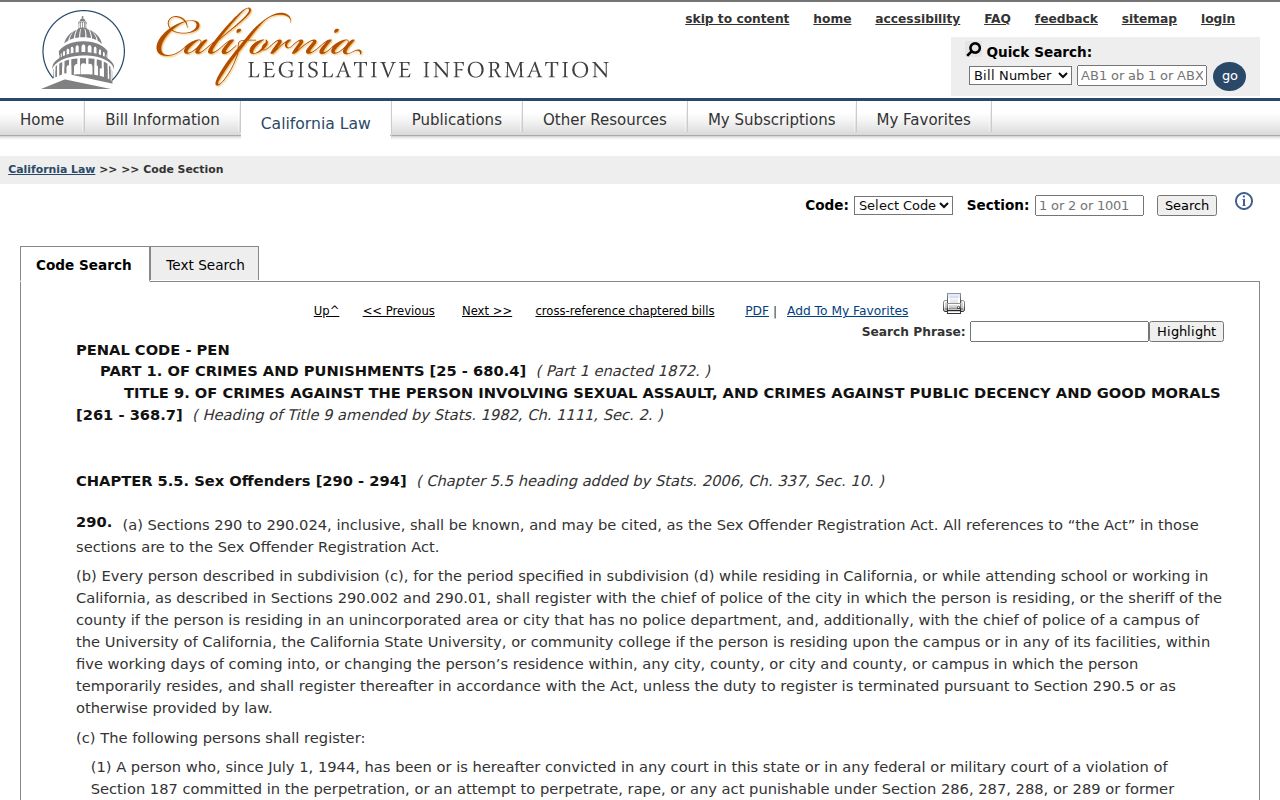
The statute, not a map marker alone, controls a person's registration duty and timing.
NSOPW Beyond San Joaquin County
The National Sex Offender Public Website adds a cross-state layer when a person may have moved or when a safety check spans more than California. It searches participating public registries rather than replacing them. California Megan's Law remains the best source for California-specific display categories, legal warnings, and the most direct state context.
Search both systems with care. A national result can point back to the responsible jurisdiction, but each state decides what its public registry shows. Different disclosure rules can produce different amounts of information. Matching identity still requires several details. Report a suspected error to the registry that published the profile.
Community Notification and Lawful Use
Registry information is provided to protect the public. Appropriate uses include family safety planning, learning about a neighborhood, and checking an official notice. It should be read as public-notification data with statutory limits, not as an invitation to investigate, confront, or punish a registrant or household. DOJ warns that crimes, harassment, and other misuse may cause criminal prosecution and civil liability.
Penal Code section 290.46 governs disclosure and misuse. It also provides that a registered sex offender who accesses the site's search function can face a fine of up to $1,000, up to six months in county jail, or both. Other users remain bound by the statute's limits. Keep records of the source and date, avoid spreading an uncertain match, and refer urgent threats to the appropriate San Joaquin County law-enforcement agency.
The official text is available in Penal Code section 290.46:
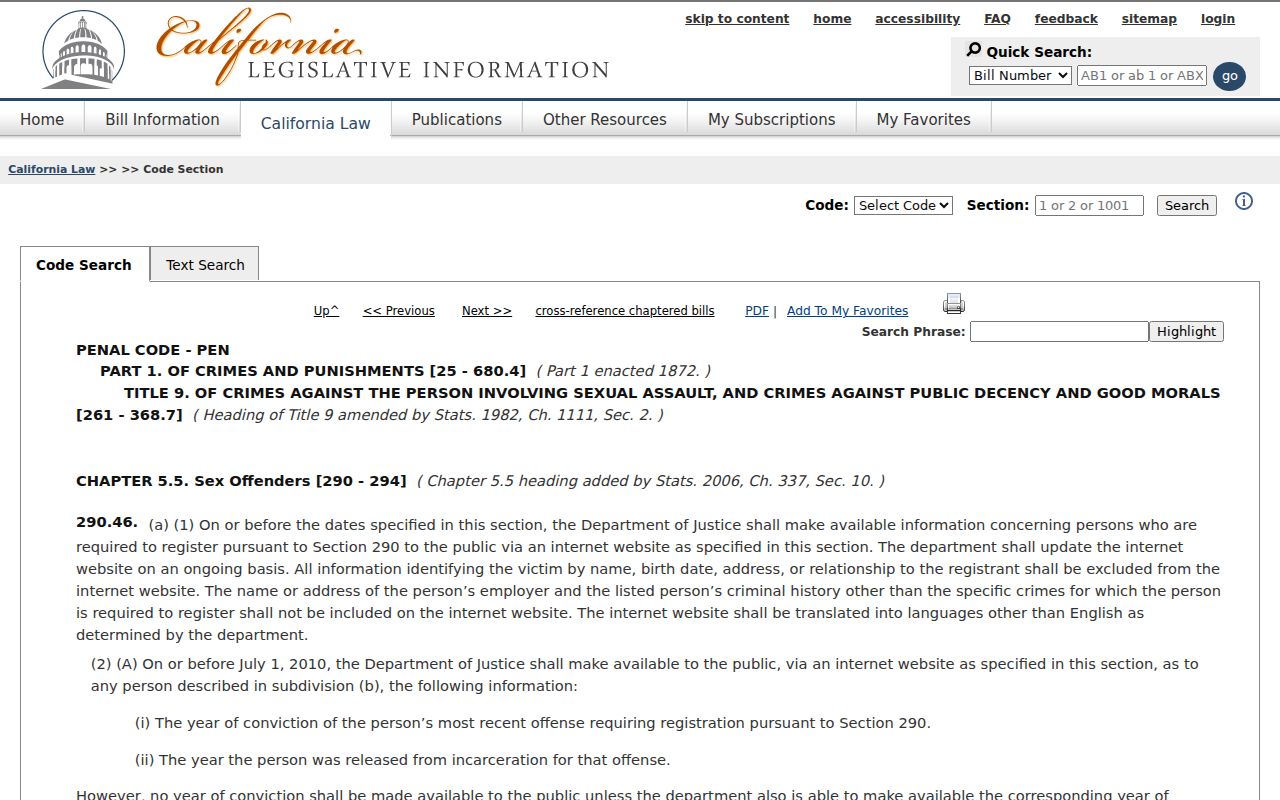
That law pairs public access with firm limits on how San Joaquin County registry information may be used.
Misuse is unlawful: Penal Code section 290.46 makes certain misuse of registry information a crime, and harassment or threats can bring criminal prosecution and civil liability.